HEAT
Copper spreads, steel lags
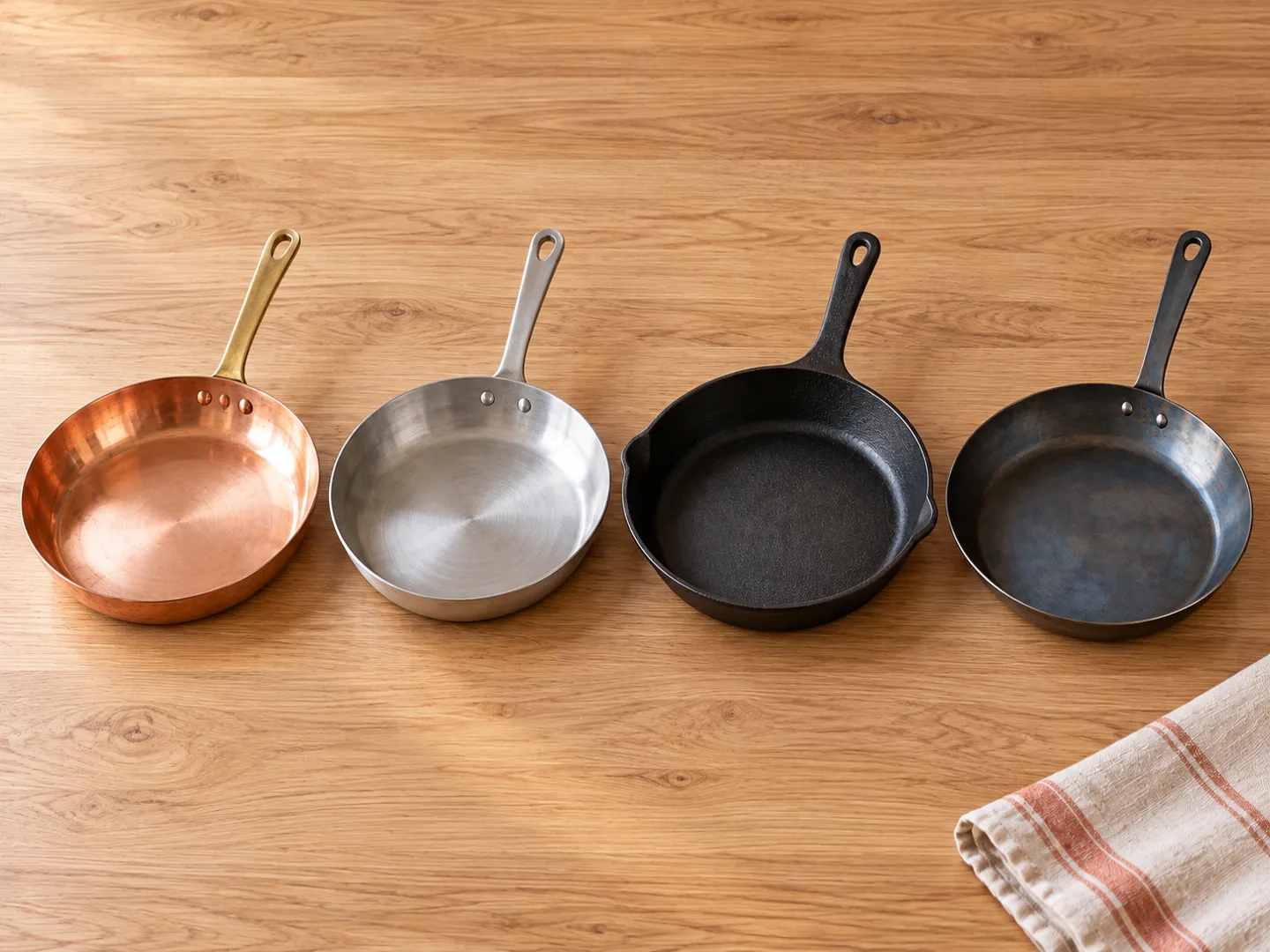
Copper conducts heat almost five times better than iron, so its base evens out hot spots fast.
Compare the metals doodlepan
WHAT THE METAL CHANGES
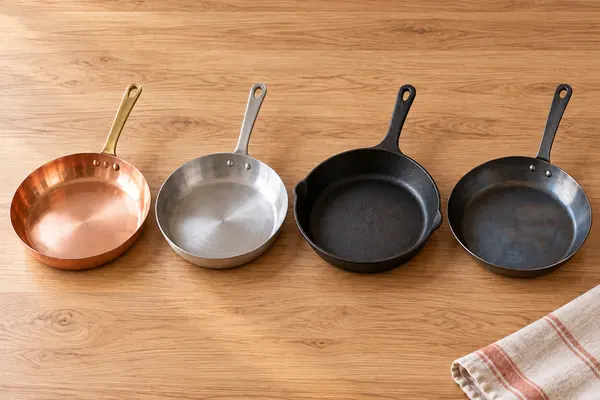
Copper, aluminium, cast iron and steel do not behave the same.
Check your pan’s metal
HEATspreads differently
The metal under your food decides how fast heat spreads, whether the pan works on induction, and how you should look after it. Here is the physics and the history, in plain English.
Plain English, with the sources linked.
Updated
THE SHORT ANSWER
How fast a pan heats, where it works
and how you care for it all start there.
HEAT
Copper conducts heat almost five times better than iron, so its base evens out hot spots fast.
Compare the metalsINDUCTION
An induction hob heats the pan itself, so the base has to be magnetic. Plain aluminium stays cold.
See the numbersCARE
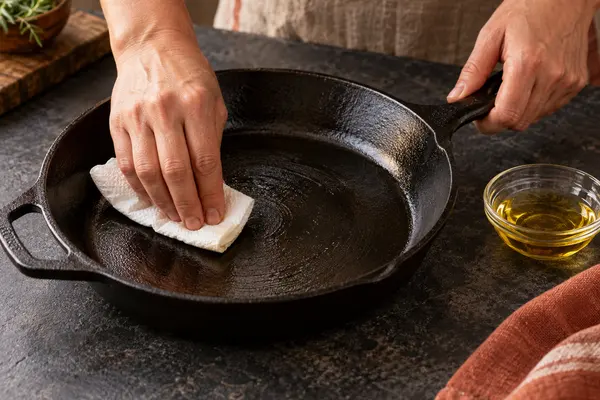
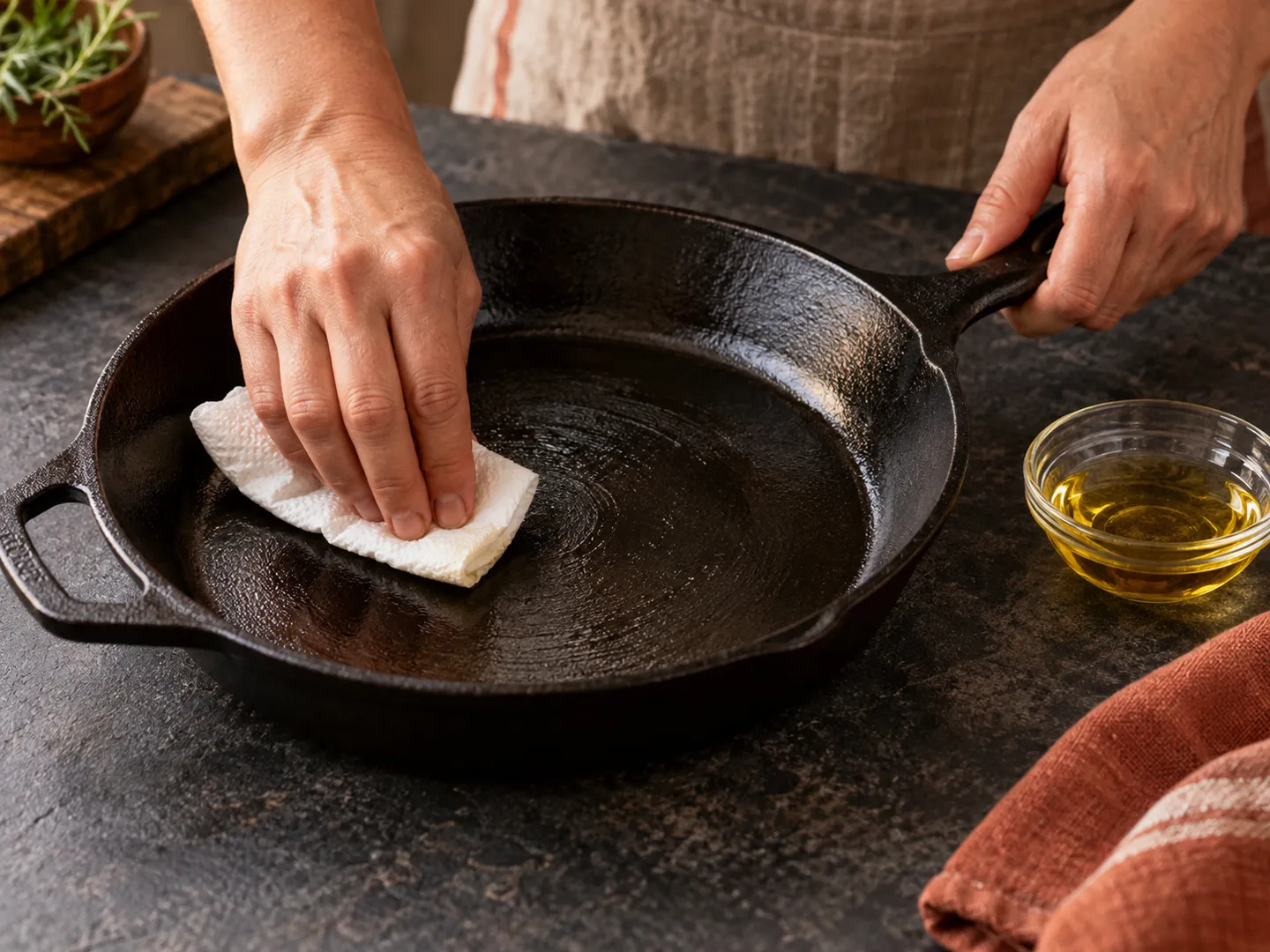
Heat turns a thin film of oil into a hard polymer layer that protects cast iron and steel.
Look after itA QUICK METAL CHECK
Pick the metal your pan is made of. The figure is its thermal conductivity, from a physics reference table at Georgia State University: the higher it is, the faster heat moves across the base.
Many pans mix metals, such as a steel body with an aluminium or copper core, to get some of both.
TWO NUMBERS WORTH KNOWING
The hob and the pan both decide
what ends up in your food.
85% vs 32%
Energy that reaches the food
About 85% of the electricity an induction hob uses goes into heating the food, against 75 to 80% for a traditional electric hob and 32% for gas. Only a magnetic pan lets an induction hob work at all.
INDUCTION · PBS NOVA
0.22 to 2.10 mg
Iron in spaghetti sauce, per 100 g
In one study gathered in a 2021 systematic review, spaghetti sauce cooked in an iron pot held about ten times the iron of the raw sauce. The review notes that acidic foods pick up the most iron.
IRON PANS · 2021 REVIEW
Neither number is a reason to replace a pan you like. They explain why the same recipe can behave differently from one kitchen to the next.
USE IT WELL
Induction only works with magnetic materials. If a fridge magnet clings firmly to the underside, the pan has a magnetic base.
They spread heat far more slowly than copper or aluminium, so let them warm through on a moderate heat before the food goes in.
Wipe on the thinnest film of oil and heat it past its smoke point, so it can polymerise into a hard coat rather than a sticky one.
Tomato sauces and other acidic foods take up more iron from an iron pan. That is worth knowing whether you want the extra iron or not.
PAN FACTS
Thermal conductivity in W/m·K: copper 385, aluminium 205, iron 79.5 and steel 50.2. That is why copper and aluminium are used to spread heat in many pan bases.
The coil makes a changing magnetic field that sets up small currents in a magnetic pan, and the pan’s resistance turns them into heat. Aluminium pans are not heated directly.
Heated past its smoke point, oil breaks into small molecules that link into a hard layer. Smoke points vary: virgin avocado oil about 520°F (271°C), coconut oil about 350°F (177°C).
In 1938 a chemist found that a cylinder of tetrafluoroethylene gas had turned into a slippery white powder, the polymer now known as PTFE. Coated muffin tins were shown to the public in 1951.
In 2006 eight chemical companies joined a US EPA programme to cut PFOA in emissions and products by 95 percent by 2010 and work towards eliminating it by 2015.
QUICK QUESTIONS
Short answers to the questions people ask most.
Copper. A physics reference table from Georgia State University gives copper a thermal conductivity of 385 W/m·K, aluminium 205, iron 79.5 and steel 50.2. Higher numbers mean heat spreads across the base faster.
Only if the base is magnetic. Induction heats the pan itself through a magnetic field, so cast iron and magnetic stainless steels work, while plain aluminium pans are not heated directly.
A thin layer of oil heated until it changes chemically. Heat breaks the fat into small molecules that link up into a hard polymer layer, which protects the iron and helps food release.
Under a US Environmental Protection Agency programme started in 2006, eight major chemical companies committed to cut PFOA in emissions and products by 95 percent by 2010 and to work towards eliminating it by 2015.
It can. A 2021 systematic review reports a study in which spaghetti sauce went from 0.22 mg of iron per 100 g raw to 2.10 mg after cooking in an iron pot. The review notes that acidic foods pick up the most.
A NAME WITH HEAT
doodlepan.com is part of the DoodleSale portfolio. It isn't in an auction right now, but you can ask about leasing it.